Who’s the real invasive species: us or them? Ecologists are rethinking urban biodiversity, by Carlyn Zwarenstein, Yahoo News June 15, 2025
The animals who cohabitate with human, whether we appreciate their presence or not, are changing. Specifically, there’s been an increase in invasive species — a term used to describe introduced organisms that bring dramatic and often destructive changes, and sometimes can drive other species to extinction.
But here’s the thing: Invasive species don’t stop evolving themselves. Consider the infamous brown rats of New York City, which have evolved longer noses and shorter upper molar tooth rows, the better to enjoy the Big Apple’s colder weather and higher-quality food.
Other invasive species are adapting behaviorally, physically and genetically to life in cities as well. While invasive species pose major public health implications and can certainly affect humans’ quality of life, their adaptive abilities can rival those of human migrants and pose a puzzling question: Who’s the real invader here?
Brian Verrelli, a professor in the Center of Biological Data Science at Virginia Commonwealth University, sees many of these questions as philosophical.
“What does it mean to invade some-thing?” he asked in a video interview. “What does it mean for humans to invade one area or another? Are there areas that we invade, or are humans welcome freely to move around the planet? We know that’s the case in some places, and not the case in others.
“It’s a bit of an interesting, hypocritical conversation,” Verrelli added, given that “we are facilitating the movement of these organisms around the planet.”
……………………………………………………………………
$1,000 device with ‘lasers and AI’ used to tackle invasive threat across Australia, Sophie Coghill, Yahoo News, 8 August 2025
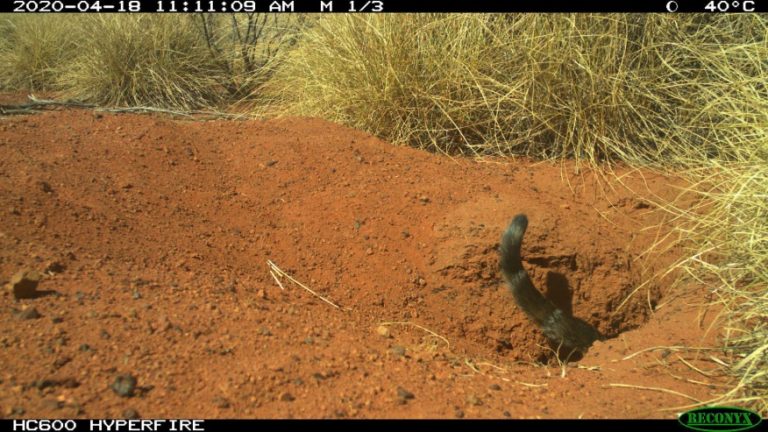
The government is doubling down on feral cats as the animals kill billions of native animals every year.
Authorities have kicked it up a notch in their fight against an invasive threat that continues to harm billions of native animals each year by deploying devices into the bush that use “lasers and AI cameras”.
More than 1.5 billion native mammals, birds, reptiles and frogs are killed every year by feral cats, and stopping the destruction continues to be a challenge for all levels of government.
However, in a breakthrough, government agencies have recently introduced Felixers — a device that determines when a cat is passing in the bush before shooting a toxin at it. And they’re proving successful.
…………………………………………………………
Push to keep cats off Melbourne streets as number of deaths skyrockets, by Eliza Rugg, Reporter, Nine News, Jul 4, 2025
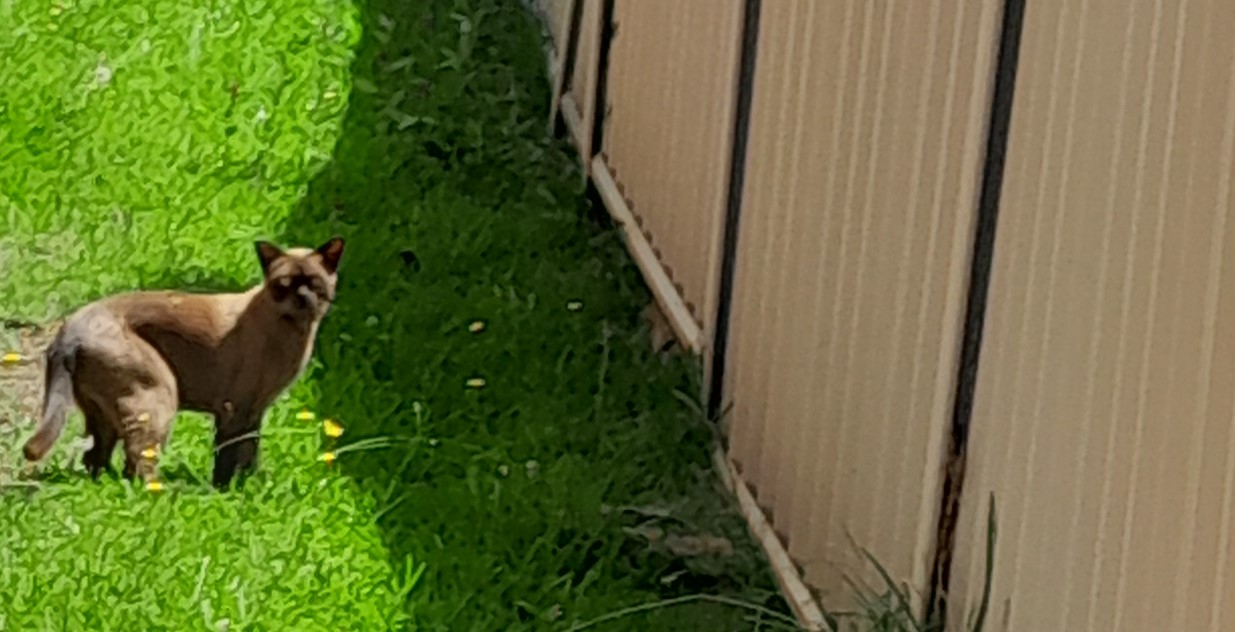
A growing number of Victorian councils are implementing stricter cat curfews and fines for owners as the RSPCA launches a new campaign to stop the animals from roaming Melbourne’s streets.
The “Rethink Roaming” campaign, prompted by data showing skyrocketing death rates among prowling pets, aims to highlight the dangers faced by cats allowed to roam freely.
It includes an online tool designed to illustrate the risks to which cats are exposed when they leave their properties, including train lines, main roads, and snakes.
The campaign also seeks to address the environmental impact of roaming cats on wildlife.
“Nine out of 10 cats that go missing are not reunited with their owners… and that is a really terrible statistic,” Rebecca Cook from RSPCA Victoria said.
More than half of Victoria’s 79 councils currently have cat curfews in place, predominantly from sunset to sunrise.